You may have heard that using a brushless motor drill is preferable to a brushed motor drill. In this post we’ll talk about why, AND the tell-tale way to immediately distinguish between the two when you’re shopping for a new engraving drill in the nail drill market.
I would like to say, though: the best tool to begin practice with is the one you already have. Some of us may already have our own nail drills, or a Dremel in our toolbox. Build your skills with what you have, and upgrade when your budget allows.
Brushless motor drills use magnets to generate their power, versus the carbon brushes of brushed motor drills. This leads to less wear-and-tear on the mechanism, higher efficiency, and a machine you won’t have to replace as often. Brushless motor drills can be used for longer stretches of time because there is very little (essentially no) heat being generated inside the hand piece.
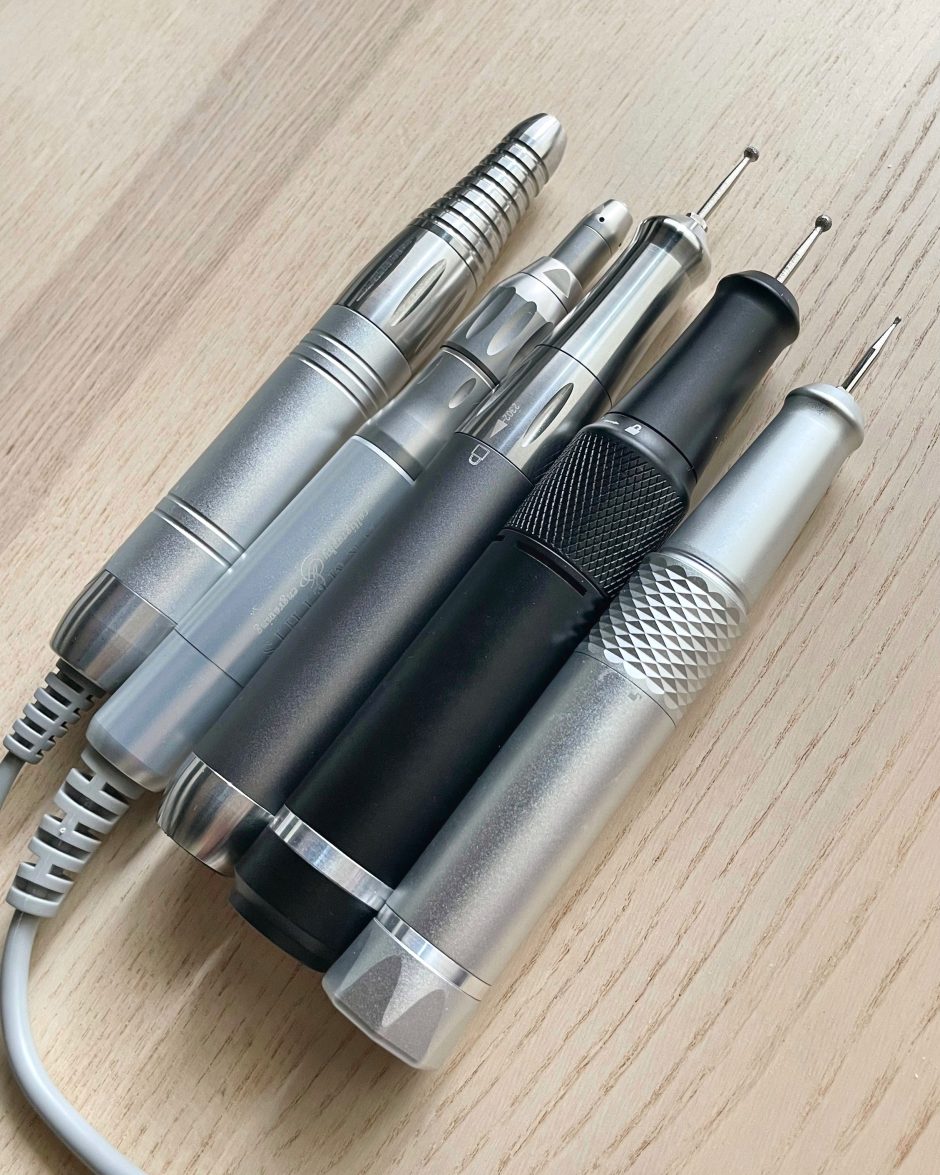
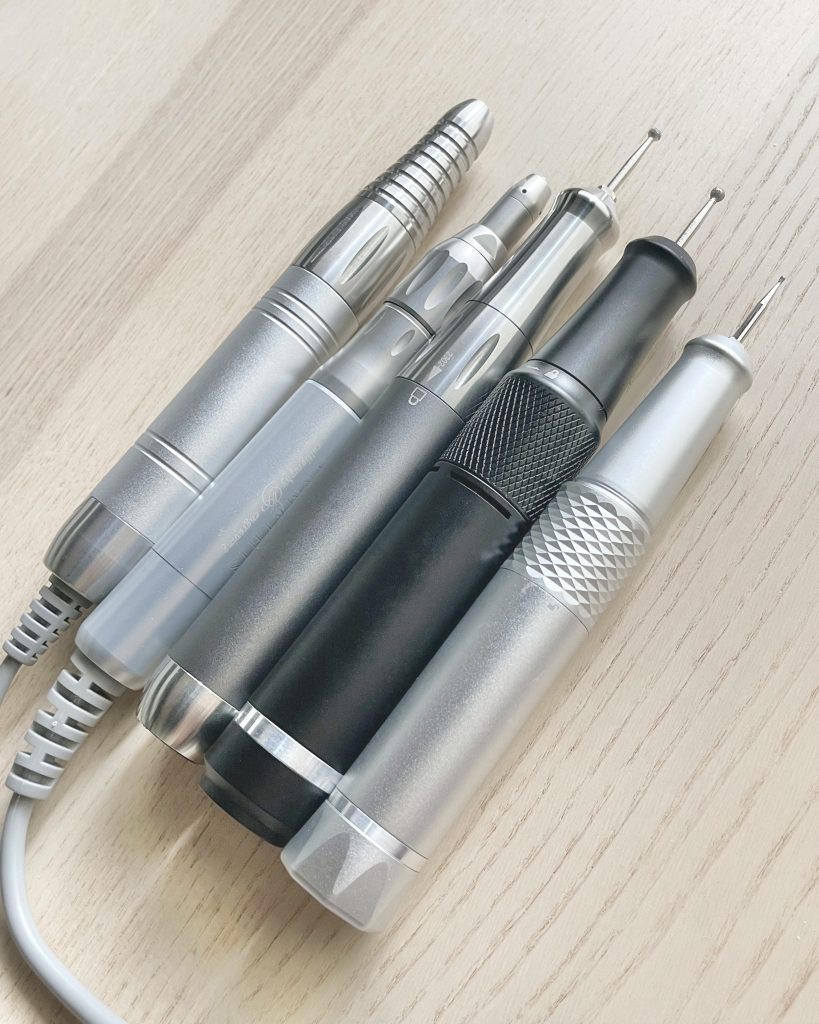
Which brings us to the tell-tale sign you’re looking at a regular brushed motor drill nail drill: there are vents for the heat to dissipate through. You will not find such holes on brushless motor hand-pieces. The answer to the photo caption above? The black hand piece (second drill from the right). The other four are brushless motor hand pieces, and you will see no vents or rectangular slits for heat to escape from.
And just in case you’re curious, you can read about every engraving drill I’ve ever used here.
Happy Engraving!

Originally Posted: March 2023; Updated: April 2026