It’s true, adding gilding wax to your engraving project can really elevate the wow-factor of your work… but is it always safe to do so?
Hey there! I’m Angie, a live event artist and engraving instructor based in Sonoma County, California. I’ve been engraving professionally since 2022, and let me tell you: gilding wax application can be a polarizing topic in the engraving community. I thought I fell adamantly in one camp (feel like I still do for the most part), until this situation came along. Read on to find out how I dealt with it.
If you’ve taken one of my engraving workshops, you know that I heavily warn against applying gilding wax on any food surfaces or drinkware– I won’t even pass out the metallic wax if we’re engraving wine glasses or glass cups as a project.
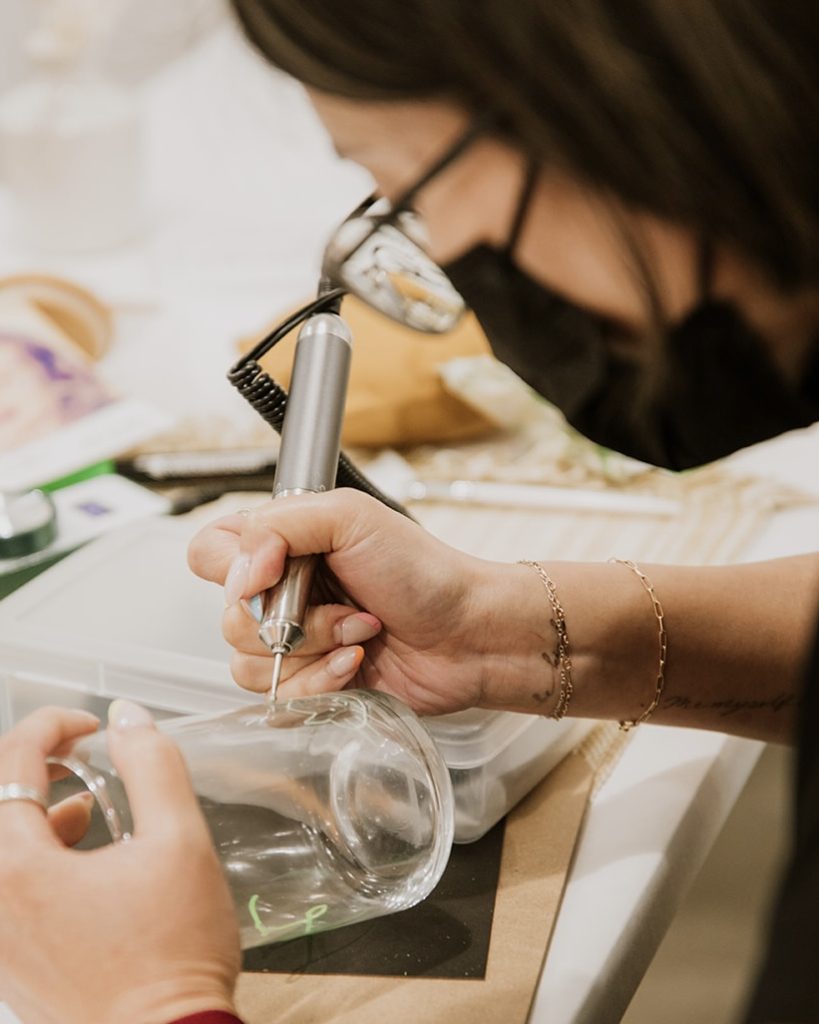
It’s because I’m as straight-laced as they come. The most absurd rule-follower you’ve ever met (I have references; ask me for them if you want). I’ll sit at the red light until it turns green… even if there aren’t other cars around. The face cream directions say to massage for two minutes then let dry for one minute before applying serum… I’ll set a timer. If you tell me something is not food-safe… I will not put it near any food.
So I was TORN when I received a request to fill whiskey glass engravings with gold. I’ve had no problems educating others in the past about why I will not apply gilding wax to any drinkware, plates, or bowls. What was different about this time? Why was it harder for me to put my foot down?
Though I did explain and provide an unfilled option, the client had their heart set on gold fill (one of their brand colors), as they had previously worked with other artists on their national tour that filled the engravings.
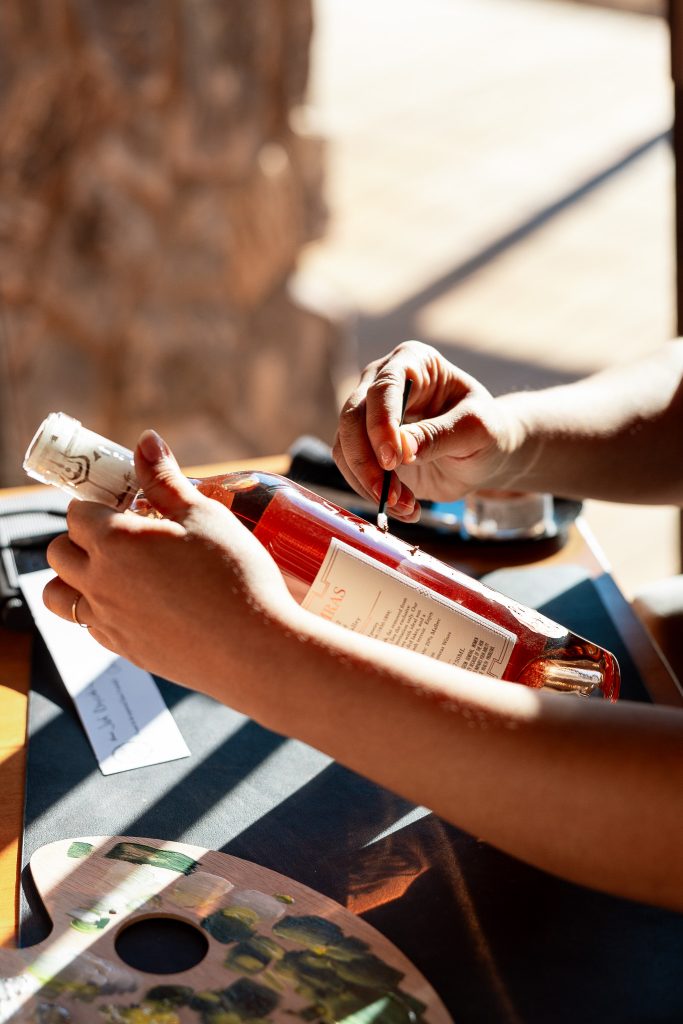
I know, I know. Just because others do something doesn’t necessarily make it right– but I did end up fulfilling the client’s request. The following are the remaining factors that played into my ultimate decision:
- The engraving would go BELOW the printed logo, as far away as possible from where anyone’s mouth would be
- Many guests would use this gift as a commemorative souvenir, not an everyday drink glass
- I’d use Sizzix Luster Wax, which does not have a strong chemical smell like Rub’n Buff (although still not certified food-safe)
- And if I’m being frank, I really wanted this job
Do I think it’s fine to use gilding wax on wine glasses and other drinkware? No, I really don’t. But would I do this again? In all honesty, yes— IF the parameters were exactly the same and I had no better option. Just like so many other things in life, it’s not always black and white. All you can do is educate yourself as much as possible, then use your best judgement in any given situation.
In the meantime, I’m working on creating a food-safe metallic wax I can use, so I’ll hopefully never run into this issue again. I’ll have to keep you posted!
Thank you so much for reading. I hope you learned something! Good luck with your upcoming project and I know you’ll make the best decision you can. 💛
PS: If you’re looking for tips on how to apply gilding wax, I walk you through my process in this 1-minute tutorial.